
The nomeranze are the historic crus of Rossese di Dolceacqua: vineyard areas with names of their own, recognised for centuries for the character of their wines. Here are the answers to the most frequent questions.
What is a nomeranza (cru)?
‘Nomeranza’ is an old Ligurian word for the reputation of a place: the name by which an area became known, like a nickname earned over time. In Dolceacqua the nomeranze are the vineyard areas that for generations have been recognised for the quality of their Rossese. It is the Ligurian equivalent of what the French call a cru.
Are the nomeranze officially recognised?
Yes. Since 2011 the Rossese di Dolceacqua DOC production rules have recognised them as ‘additional geographical mentions’ (menzioni geografiche aggiuntive), just like the crus of Barolo and Barbaresco. The current list includes 33 nomeranze in seven municipalities and was approved by ministerial decree on 23 June 2025 (Italian Official Gazette no. 151 of 2 July 2025). Read the official publication (EU Official Journal).
How were they identified?
Through three years of research: archive documents going back to the 12th century, more than 20 historical maps, aerial photographs up to 1954, and 8,000 vineyard plots recorded by hand from early 20th-century land registers and transferred onto today’s maps. At the beginning of the last century the area had more than 3,000 hectares of vines and over 1,300 place names linked to the vine. The areas with an unbroken history of viticulture were selected, then checked in the field together with the growers and mapped on the land registry.
Who carried out the study?
The study ‘Le Nomeranze del Rossese di Dolceacqua’ was edited by Alessandro Giacobbe and Filippo Rondelli, coordinated by Claudio Andreini for CIA. It is a project of the Italian Farmers’ Confederation (CIA) of Imperia and the Imperia Chamber of Commerce, carried out with the municipalities of Camporosso, Dolceacqua, Perinaldo, San Biagio della Cima, Soldano and Vallecrosia, the Rossese di Dolceacqua Growers’ Association, Confartigianato, Federconsumatori and the Liguria Region.
When can a nomeranza appear on the label?
Only on Rossese di Dolceacqua DOC, when the wine comes from that nomeranza and is vinified separately. Our vintage Rossese di Dolceacqua sometimes includes grapes from nomeranze too, but they are blended into a single wine, so they are not named on the label.
Why don’t you mention nomeranze for your white wines?
The nomeranze belong to the Rossese di Dolceacqua DOC. Our Vermentino and Pigato are Riviera Ligure di Ponente DOC, so for them we simply speak of vineyards, even when they grow in the same places.
What difference does a nomeranza make in the glass?
Rossese faithfully reflects the place it comes from. Soils, altitudes and exposures change within a few hundred metres: the blue clays of Terrabianca give a different wine from the flysch sandstones of Arcagna. That is why we vinify separately the grapes of the nomeranze we name on our labels.
Which wines come from your nomeranze?
Terrabianca, from the Terrabianca nomeranza (cru), and Bricco Arcagna, from the Arcagna nomeranza (cru).
Which nomeranze does Terre Bianche farm?
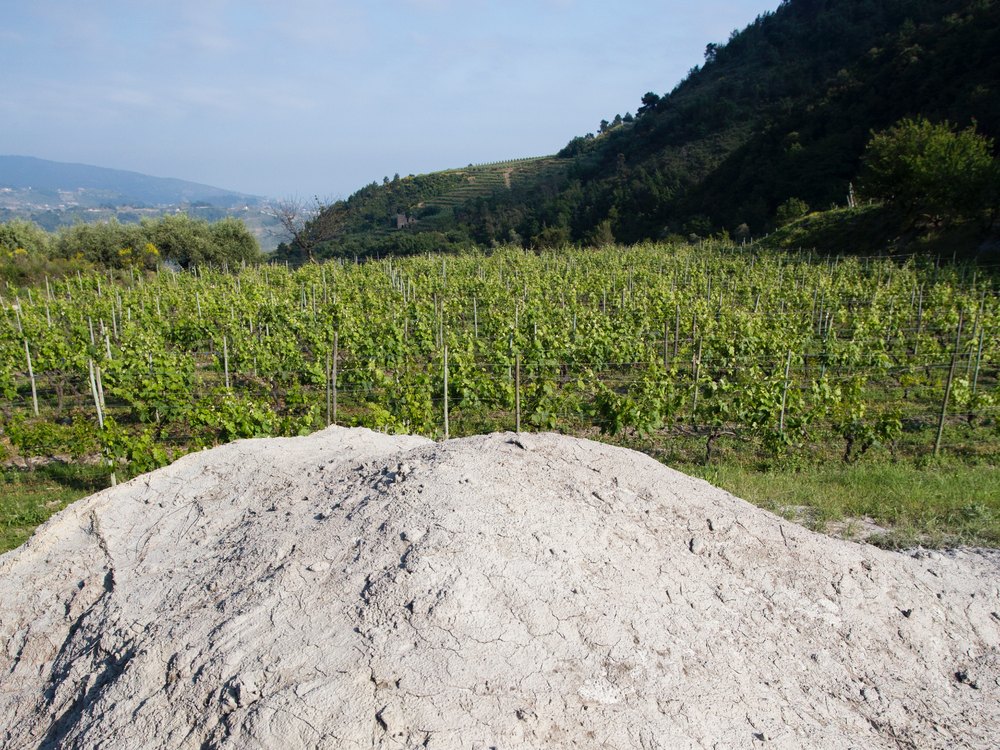
Terrabianca
Camporosso, Nervia valley
Blue clays and flysch, facing east between 380 and 430 metres. It gave its name to our estate: here the Rondelli family planted its first Rossese in 1870. Find out more.
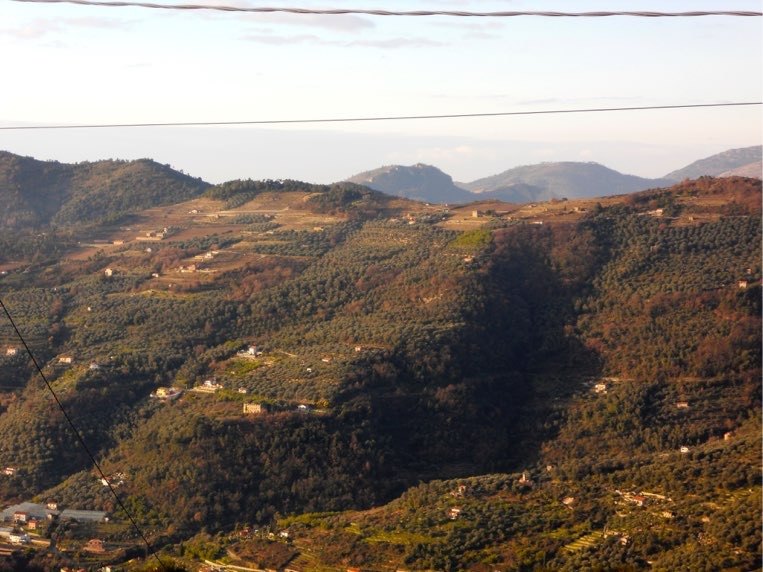
Arcagna
Dolceacqua, Nervia valley
On the hilltop, between 320 and 420 metres, it is one of the oldest cultivated places in Liguria. The name comes from the Latin loca arcanea, ‘enclosed, protected place’. Find out more.
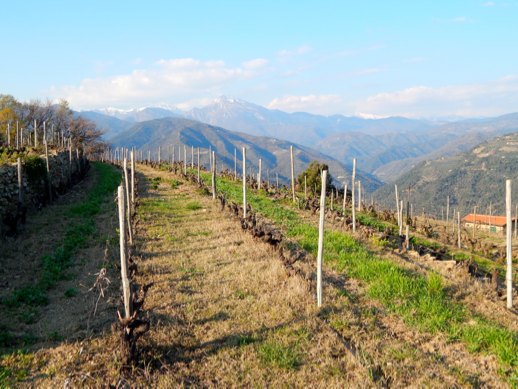
Aurin
Dolceacqua, Nervia valley
On the northernmost hilltop, bordering Arcagna, between 420 and 450 metres. A pre-Roman Ligurian settlement stood here; the name comes from the Roman Aurinia family. Find out more.
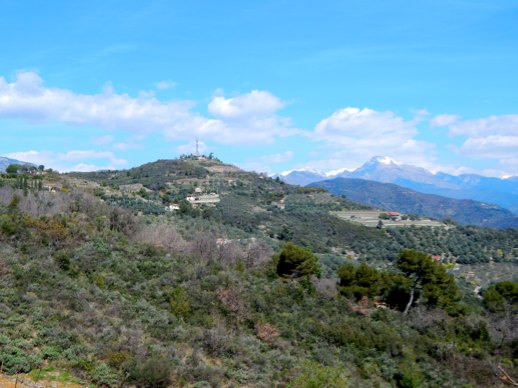
Tramontina
Dolceacqua, Nervia valley
Facing south between 370 and 520 metres, it too was the site of an ancient Ligurian hilltop settlement. The name recalls its position towards the tramontana, the north wind.
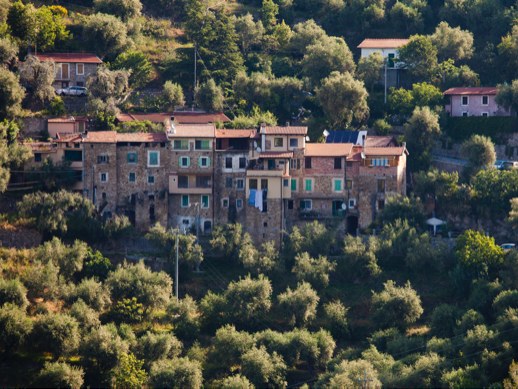
Brunetti
Camporosso, Roia valley
Facing west between 270 and 430 metres. The name comes from a nickname or surname; by tradition it is considered part of Terrabianca.
Photos and 3D map by Filippo Rondelli; the photos are from the study ‘Le Nomeranze del Rossese di Dolceacqua’.